  |
|
|
|
|
A Return to Ancient Teachings -- Language and Literature in the Western Tradition
|
|
|
Home | A Few Notes About Me | Notes | Assignments | Hints |
New Page Title
|
|
|


This website is a publication of Mildred M. Espree, Professor of English at San Jacinto College North Campus.
I am the former Advanced Placement, Secondary English Lead Teacher in the Houston Independent School District ( www.houstonisd.org).
Today I also offer editing and tutoring services for college and high school students, and consultations for small businesses,
schools and non-profit organizations through Espree Enterprises.
Welcome to my class! I'm Mrs. Mildred Espree. You're here because I think the most profound thing I can do with my life
is to share my love of the world, my love of people, my love of language, and my passion for knowledge, wisdom, books and
God with you, my most precious students. So if you're here, join me for one of my favorite blends of Antigua Coffee as I tell
you what's in my heart and what my dreams are for you. You see a teacher always has dreams. When I dream, I dream about my
students, about how you're so steeped in culture, and wit, and vision, and how it's bubbling over inside you as it tries to
get out. I want to know your dreams, and if possible, do my part to help you realize them. So I will ask you to write reflective
pieces from your hearts as often as I require a timed writing, an exercise in literary criticism, a dialectical journal, or
a content exam. I believe that your writing will help you realize your dreams because I see the rendering of meaning
through composition (writing) as a way of life. It is my way of life. I read books, I talk about books, I even dream prose
and poetry in my sleep. One day, when I finish teaching and studying, I'm going to finish writing my memoirs. Meanwhile, I'll
have to make more memories. I'm working at that too. I have a husband who was my high school sweetheart and we've been married
for more than 32 years. His name is Rene Jerome Espree. My son is Jared Hilary Espree, and my daughter is Genevieve
Rachel Espree-Bushnell. Besides being a bas bleu (a literary woman), I have another passion, my family.
That's what I'm writing about. I have a very special name for my memoirs: The Graveyards of the Sabine. An excerpt
from them has already been published in The Gulf Coast Journal of Arts and Literature, the literary magazine of
the the University of Houston's Creative Writing Program. This autobiographical essay was first published in the
January, 1995 Winter Edition. The completion of this work is my most persistent dream. In October 2004, I published a
non-fiction piece called Magnificat, in Defining Moments, a literary publication of the Plymouth Writing Group at Plymouth
State University in New Hampshire. My goal for this next year is to get more of my poetry published. I have also produced
four curriculum units as a fellow of the Houston Teachers Institute. Four of my poems are published in the Summer edition
of English in Texas.
If you're reading this, then you're enrolled in English 1301 -- Language and Composition, or English 1302, Literature
and Composition. In these classes, the emphasis is on rhetorical and literary study and writing. If you're here, then
there are some things you need to know about what's important. I want you to believe, as I truly believe, that the purpose
of literature -- novels, stories, poetry, drama, is not only to communicate information (not this), but to help you live a
more fully realized life, to help you appreciate the beauty, the ebb and flow of time and life, the power of your own written
voice, and a love of philosophy. This class is about Literary Art, which is another way of talking about the "art" of living
well. Don't you like to talk about life? I do. Over a cup of coffee, or my Cajun-Creole gumbo, or a good book like the Psalms
of David or Isaiah in the Old Testament or the gospel of Mathew in the New Testament. But on any given day, I am also likely
to read an excerpt from the Bhagavad Gita or Lao Tzu.
|
|
|
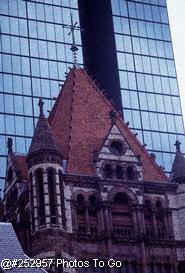
| An Example of Postmodernity in Architecture |
|
|
| In postmodern architecture, there is a juxtapositioning of unlikely things. . . |
Literary Study in the late twentieth century and early twenty-first century has
been challenged and indeed transformed by critical knowledges from various quarters, knowledges that have called into question
the ways of thinking about meaning, language, reading, writing, literature, culture...and because of this the boundaries of
English as a discipline have been redrawn. What has happened over the past twenty to thirty years
is what is called the history of postmodernity. Broadly understood, postmodernism is the theory behind the social changes
that have been global in scope, among them the growth of multinational corporations, the emergence of a digital economy, the
rise of consumer culture, the flexible reorganization of the exploitation of women and poor people, particularly in third
world countries by first world countries, the replacement of colonial empires with new forms of imperialism, and the more
recent end of the Cold War, and the New Age terrorism of September 11, 2001. In studying postmodern knowledges, we will situate
our studies of the humanities within this historical frame and confront the differences among several critical re-understandings
of concepts (among them -- meaning, difference, subjectivity, the relation between culture and society, milieu and history).
We will examine texts both in the time they were written, and the time in which they were set. We will also deconstruct texts
and examine them for what was not included in the discourse either because of history or the failure of consciousness.
These ideas are best accessed and elucidated through the writings of author and professor, David Richter,
whose ideas I have relied upon extensively in teaching these courses.
This class
website is my creative way of getting you excited about English, keeping
you up to date on assignments, and providing you with valuable online resources. Because a class site should be engaging,
I'll present information that makes the subject interesting and fun, such as brain teasers or polls about current events.
Of course, I'll want to include plenty of links so students can explore a wealth of ideas on the web. I would like to include
my rubrics for grading here. So this site will be continuously UNDER CONSTRUCTION.
| A Book's Worth = ItsTribute to the Human Condition |
|
|
| What is the name of your favorite book? |
I pray the Liturgy
of the Hours.
Please give me a one and a half week
window for grading your essays. It takes time to read closely and to provide you with useful and meaningful responses.
|
|
Respond to what you read by writing editorials and sending letters to the editor. Use what you have
learned in class, what you have read in the news magazines, novels, and what you have discussed in class to make a real difference
in your world. Most people do not know the names of their legislators. Do you?
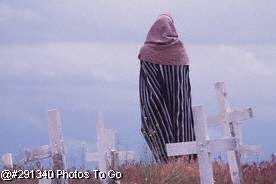
| In Remembrance of the Things Past |
|
|
| "Never fail to ask the questions, but know that you must live your way to the answers." |
If you are a scholar, I expect you to keep up with the assigned readings, to be prepared for in-depth
discussions, to complete all assignments, to read independently and to consider meeting deadlines a part of your honor code.
Much of what you will receive from this classroom experience depends on you. If you are just along for the ride or the glory,
you won't find either here. Like most things that matter in life, much sweat is a given; for something extraordinary to happen
with your learning, you must give it blood, sweat and tears. Ultimately, you may pass the course, you may even do very well,
but what you really learn is not something I can discern in 90 minutes two or three times a week for nine months.
The experience may create a new life in you, but it will also require of you a lifetime of nurturing...
What have your experiences with the literature taught you
about the world? Now to what use will you put this knowledge? Are you wiser and nobler. Did it make you a truth seeker or
a soothsayer? Are these new truths a source of wonder? Discover Plato's Ring of Gyges? How about the Myth of Err? Ever wonder
what makes a true friend? Read Aristotle's Nichomachean Ethics. Want more knowledge of justice? Read Plato's Politics or The
Republic.
|
|
|
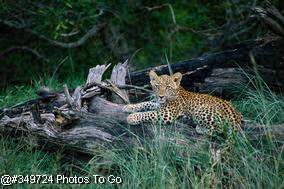
| If dappled can be beautiful, here's a wild example |
|
|
| You, my students, are also amazing creatures! |
"Glory be to God for dappled things..." Gerard Manley Hopkins -- priest and poet. By this, I mean each
and every one of you! So did Hopkins.
What should a good book do well?
Keep you in suspense, of course, or
at least,
Keep
You
Reading!
And reading,
And reading,
and reading
and reading, and reading, and reading.
-------------------------------------------
A poet once said that life will
ultimately teach us how to be most totally alone...sans friends, sans teeth, sans sight, sans touch, sans hair, pure spirit,
ommmmmm, like the water in the river, plural, collective, total, sans persona, sans loneliness.... Another writer suggested
that once this happens, we will be most loved, and perhaps a little more REAL, except to those who don't truly understand.
Another writer thought the best way to say goodbye,
was to say it long before departure.
But like most who write to live,
I don't ever want to say goodbye, not to earth or to anyone on it. Never did either. That's why I write. It's a way to survive
death. Comprend?
| Mildred M. Barlow-Espree |
|
|
| All knowledge is an arch where through gleams that untraveled world...Alfred, Lord Tennyson |
Here, I might put a weekly brain teaser, for example:
What is negative capability?
Answer: Coined by Keats and also referred to as aesthetic
distance, "Negative Capability," refers to the total objectivity of a writer wherein her view and judgments are withheld
in her account of human experience. Just like it seems, however, negatively capability has spiritual overtones. It suggests
paradox and reversals...
For example, in a picture, thinning hair might mean baldness
in men or cancer in women. It could be a fashion statement, or not. In my case, probably so once upon a time...However, today
I wear my hair longer and actually prefer to wear it that way when I can manage it -- always did actually. I say all this
to urge students to never, ever, take anything for granted about a person. Given the exigencies and ironies of human
nature, assumptions are almost always conditionally certain -- to be wrong! Likewise, if you are reading a person or
a story, you may add up the facts and still not know anything at all. After all, what do we ever really know about anything?
Or anyone? Ask God. He is the master of negative capability and also has a wonderful sense of humor!
|
|
|